Moving from clinical development to commercialization can be one of the most complex stages in an investigational drug product’s lifecycle. New teams come into the picture. Critical knowledge must be transferred. And timelines come under pressure as the commercial launch deadline approaches.
For this biopharma company preparing for its first commercial launch, maintaining momentum was essential. By supporting their product throughout its clinical development journey and into commercialization, Sharp helped simplify the transition, reduce risks and create a clear path to launch readiness.
Building the Foundation During Clinical Development
The sponsor initially engaged Sharp to support a series of global Phase III clinical studies. What began as support for several studies quickly expanded into a broader partnership as the development program evolved.
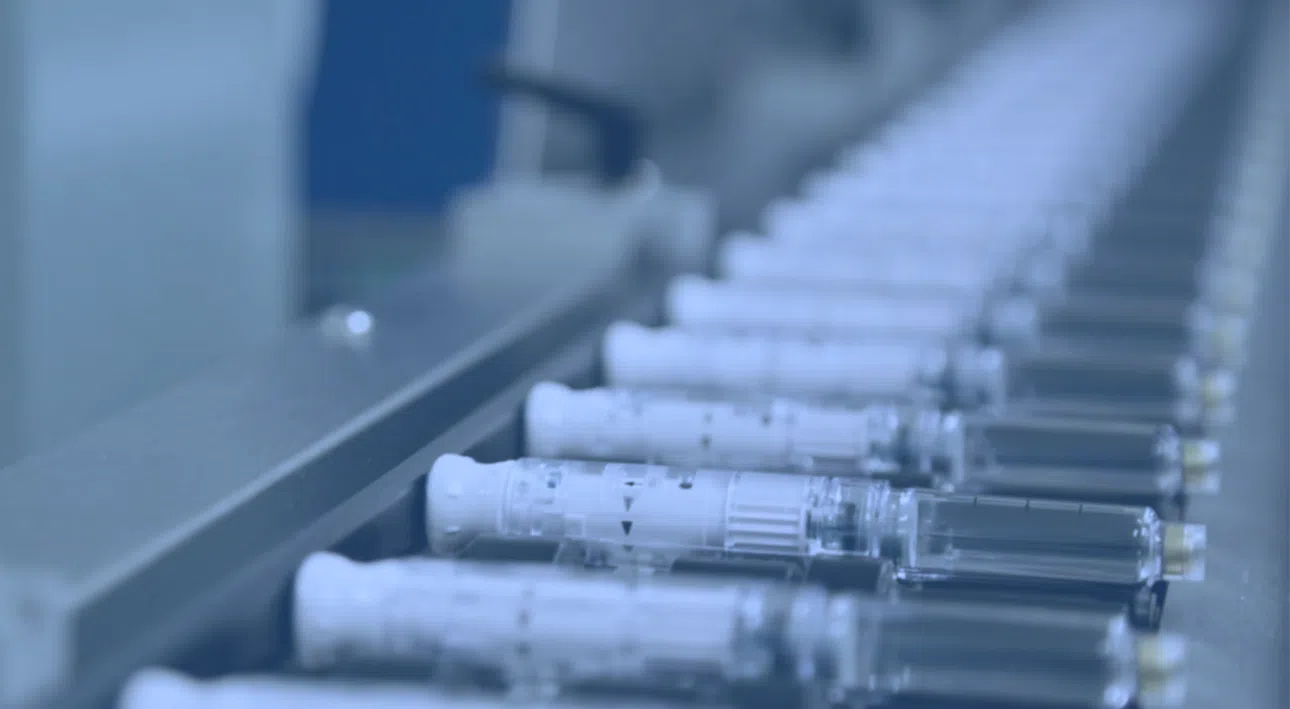
Supporting this sponsor’s clinical program required a highly customized, solution-oriented approach that pushed beyond conventional packaging and labeling strategies. The pre-filled syringe presentation presented two significant challenges: extremely limited label space and the need to effectively blind the color of the drug product within the syringe.
As the study evolved, a second presentation, an autoinjector, was introduced, adding another layer of complexity. The clinical team successfully developed an innovative solution that not only blinded the product color within the autoinjector but also incorporated a specialized detachable label design. This unique labeling concept adhered securely to the autoinjector device while allowing patients to remove it for a more patient-friendly administration, ensuring both compliance and usability throughout the trial.
Delivering this solution required more than technical expertise; it demanded ingenuity, adaptability, and exceptional teamwork. As the study evolved and new complexities emerged, our team responded with innovative approaches to overcome design, blinding, and usability challenges. Through close collaboration and a relentless focus on execution, we managed to ensure all study requirements were met while maintaining ambitious project timelines.
– Clinical Project Manager
To support the sponsor’s changing requirements, Sharp brought together experts across engineering, clinical operations, project management, and client support. Working as an extension of the sponsor’s team, these SMEs developed practical solutions that could adapt to the demands of the product and the clinical studies.
During the clinical phases, Sharp built a deep understanding of the product, its packaging requirements, and the sponsor’s operating model. That knowledge would prove invaluable as commercialization approached.
Creating a Seamless Transition
As the product moved closer to commercialization, the value of supplier continuity became very clear.
By avoiding the risks associated with tech transfer to a new organization, the sponsor was able to build on the existing partnership. Product specifications, packaging considerations, study history, and ways of working were already established and proven.
This enabled a smoother transition between clinical and commercial teams. Critical information was shared quickly and early, helping the sponsor make decisions faster and maintain momentum as commercialization approached. Commercial planning began with an established knowledge base rather than a lengthy onboarding process.
Supporting Commercial Launch Readiness
As with all commercial drug launches, preparing for commercialization required significant planning, including evolving timelines, changing requirements, and multiple launch scenarios. Clinical and commercial cross-functional teams at Sharp worked together to anticipate potential challenges and ensure plans remained on track as the product progressed toward launch.
Drawing on the clinical team’s extensive experience with the product allowed Sharp’s commercial team to start planning with greater confidence, context, and operational insight. This established knowledge base served as a strong starting point, allowing the commercial team to apply its expertise in commercial operations and customize the approach to meet the sponsor’s specific goals. The partnership between clinical and commercial teams ultimately helped streamline the journey to commercial readiness.
The onboarding phase of a new product launch often involves navigating significant ambiguity as project expectations, scope, and requirements are established. Our own clinical team’s deep product knowledge gave us a valuable head start, so we had informed and productive discussions from day one. By pairing that foundation with our commercial expertise, we were able to quickly define requirements, align on the right approach, and drive the project toward a successful outcome.
– Commercial Project Manager
The Value of Continuity
One of the biggest advantages of an integrated clinical-to-commercial approach is continuity. Because Sharp supported the product throughout its development journey, commercial planning could begin early, with an established understanding of the product, its packaging requirements, and the sponsor’s processes. By working with teams experienced across both clinical and commercial operations, product knowledge and insights carried forward throughout the program, reducing handoff risks for the sponsor and helping maintain momentum toward launch.
Key benefits for this approach include:
- Reduced risk and complexity during the transition to commercialization.
- Consistent communication through a single partnership.
- Flexible support as product and program requirements evolved.
- Faster commercial launch readiness due to established knowledge of the drug product.
For sponsors preparing to move from clinical development to commercialization, continuity matters. With clinical and commercial expertise working as one team, Sharp brings the experience and precision to move products through complexity to commercial readiness.
To learn more about reducing risk and improving coordination across the product lifecycle, watch our webinar, Clinical Manufacturing Meets Packaging: A Smarter Model for Managing Risk.
Precision you can lean on.